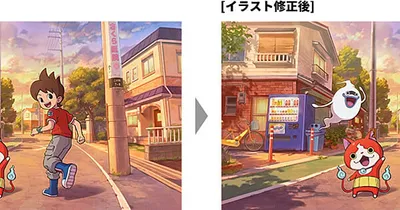
Following its recent "Vision 2026 II Dream" presentation, Level-5 has released a detailed statement addressing public concern over the use of generative AI in its promotional materials. The company acknowledged that while it experimented with AI tools to enhance the presentation's visual impact, the implementation led to confusion and unintended errors in both video and concept art.
Central to the controversy was a concept illustration for the upcoming Yōkai Watch 2: Haunted Domain. Viewers pointed to inconsistencies in the image—such as simplified electrical poles and missing bicycle brake levers—as evidence of AI generation. Level-5 clarified that these elements were actually the result of human error or intentional design choices, noting that the original Nintendo 3DS titles also lacked bicycle brake details. The studio has since provided side-by-side comparisons to distinguish between its manual design work and the AI-assisted elements.
CEO Akihiko Hino issued a personal apology, admitting that the company's desire to deliver a "phenomenal presentation" led to an experimental use of technology that ultimately offended some viewers. Moving forward, Level-5 stated it will restrict the use of generative AI strictly to internal efficiency tasks, pledging to exclude the technology from all future video content presented directly to users.
This incident highlights the growing scrutiny surrounding AI in game marketing, particularly as studios like Level-5 continue to manage high-profile franchises like Professor Layton, Inazuma Eleven, and DECAPOLICE. With the company currently preparing for its Tokyo Game Show 2026 booth, the move to replace the controversial assets serves as a clear attempt to refocus attention on the games themselves rather than the production process.